

As a Techie who has been part of standing up many of the platforms and tools we use today, I’m the first to question how technology is manipulated to suppress the voices of Black and Brown people online.
Of all the platforms I’ve been part of building and using, LinkedIn, the professional community I joined on December 26, 2008, has raised the most questions for me:
Question: Is LinkedIn Walking The Walk?
— How do pervs and racists post freely, while folks challenging racial hate, discrimination, and injustice are frequently shadow-banned and removed from the community?
— What process is applied to these actions? What is the #DEI competency and ethnic makeup of the decision-makers involved? Who or what governs the process of suppressing, banning, and removing LinkedIn users?
— What tools are utilized to monitor the administrator bias occurring on LinkedIn? Has LI considered tools like #JusticeAI created by Christian Ortiz to prevent internal user biases from informing the public-facing platform?
— Who at LinkedIn defines what constitutes the “professional” standard? Given how ‘professionalism’ is weaponized in the workplace against Black and Brown women, how is this subjective “standard” informed?
— If users are required to meet “community guidelines”, what criteria are employers and businesses using the platform to promote jobs held to? How do users who observe business practices that reflect prejudice and bias work with LinkedIn to hold everyone equally accountable?
— Is LinkedIn capturing data related to Black and Brown women sharing workplace trauma experiences and mapping those user experiences to the employers LinkedIn partners with to recruit and promote job opportunities? Is there a LI Data Scientist analyzing the repository of suffering being shared by Women of Color?
— How can LinkedIn use our thought leadership to train its #AI and leverage our credentials to elevate its industry status yet not afford Black and Brown professionals’ support in achieving safe and equitable workplace environments?
— What is the LinkedIn Diversity, Equity, and Inclusion team doing to address the plethora of racial justice issues populating our feeds daily and to hold itself [and corporate users] accountable to the same standards that apply to everyone else?
It’s not what we talk about that creates change, it is what we do to make transformative change happen.
There can be no bar of professionalism met that lacks a foundation built on equality, equity, and fairness for everyone. If LinkedIn is not working to this end in 2024, with everything we’re witnessing and experiencing, it is failing all of us.
Equality: What Does The Data Say?
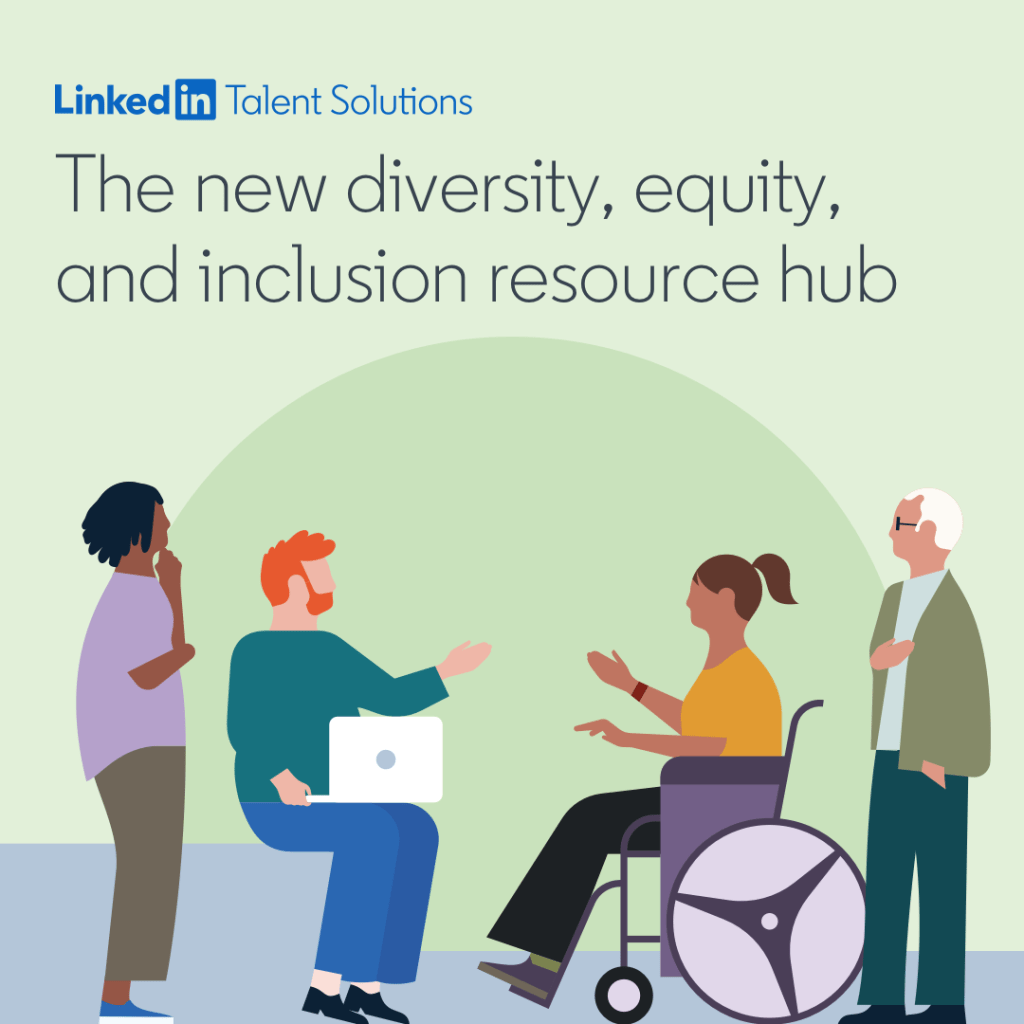
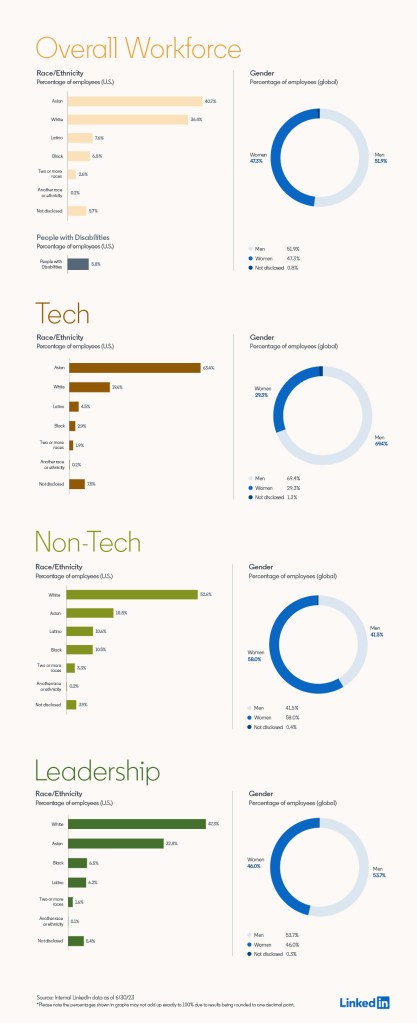
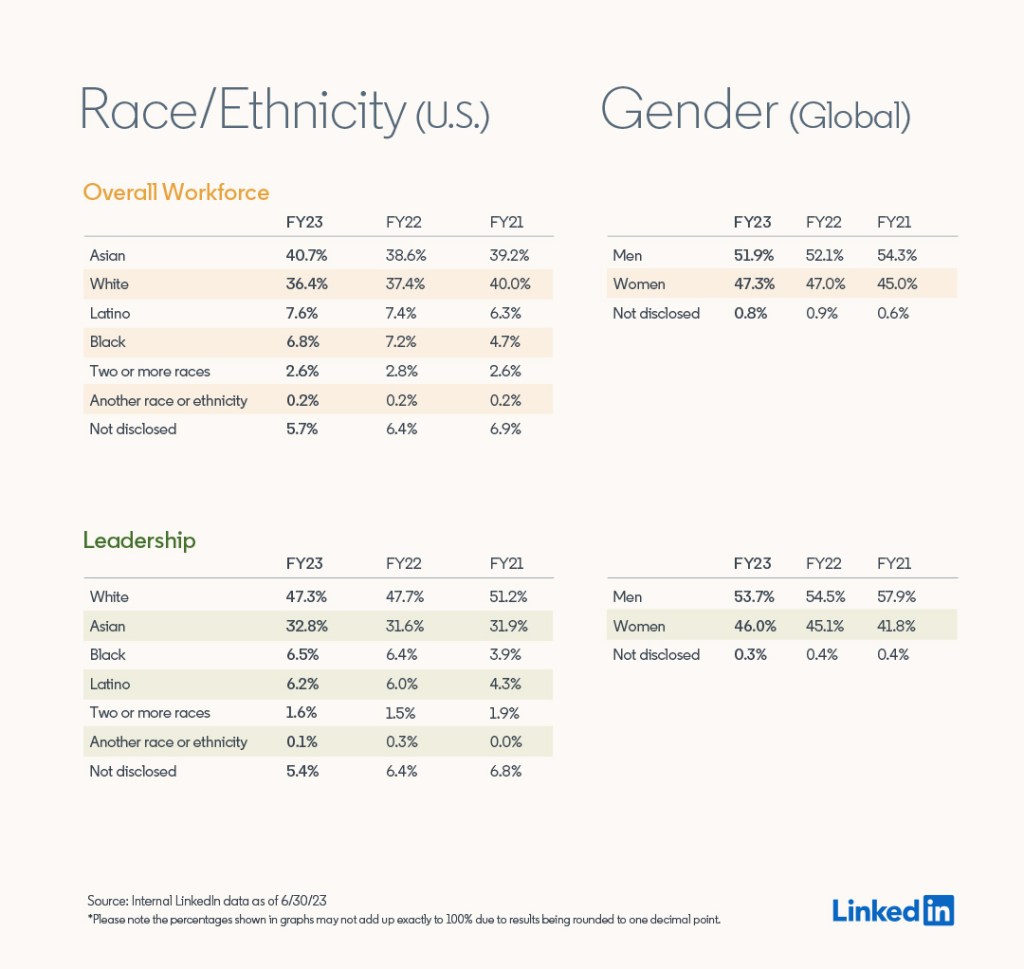
Take a moment to review LinkedIn’s 2023 Workforce Diversity Report, published on November 1, 2023. Here are just a few quick takeaways:
Tech Employees
- 63% Asian
- 20% White
- 5% Latino
- 2% Black
Non-Tech Employees
- 53% Asian
- 19% White
- 11% Latino
- 11% Black
Gender
- 70% Male Tech
- 58% Women Non-Tech
Leadership
- 6% both Black and Brown demographics
Have you ever wondered why it often feels like Black and Brown professional women are muted, policed, and banned on LinkedIn’s platform more than our non-Black and Brown peers? Because we are.
We are not at the table. We aren’t even in the BUILDING!
There is ZERO parity for Black and Brown women at LinkedIn as it relates to employee and leadership representation.
Data Is Queen.
Simple. How can LinkedIn be the platform for delivering and promoting models of Diversity, Equity, and Inclusion while not being accountable for modeling the same?
Be on the lookout for LinkedIn’s 2024 Workforce Diversity Report. Keep checking LinkedIn’s Corporate Communications to get a clear picture of who and what informs our interactions and representation on this professional platform.
#DoBetterLinkedIn #EqualityMatters
Queen Gritty.
 FLIP THE TABLE FOR EQUITY.