November 16, 2026
what would Zora do?
Zora Neale Hurston was an Author, Cultural Anthropologist, Historian and Womanist. She was also a keeper of our stories.
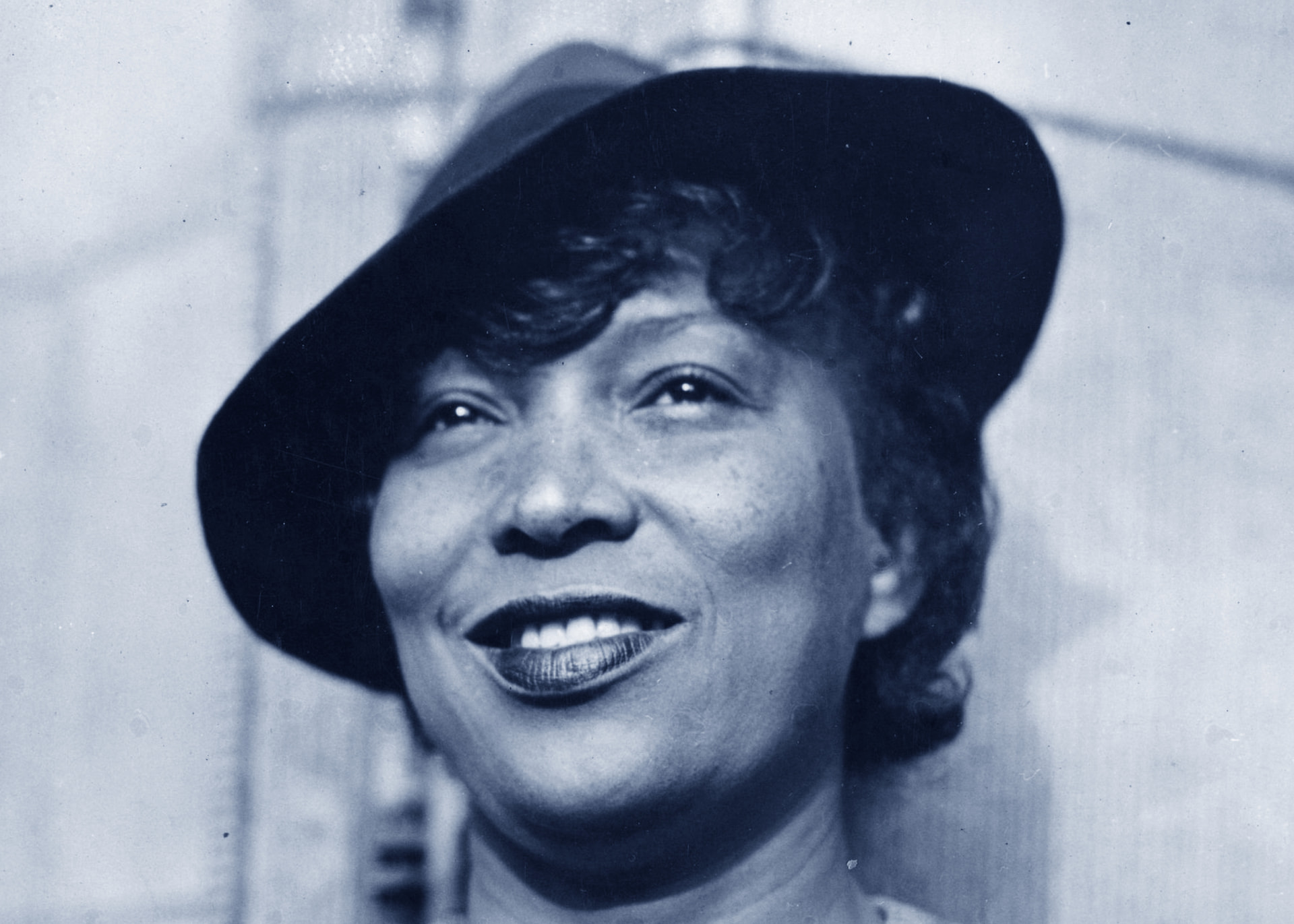
Zora wrote us down.
Zora grew up in Eatonville, Florida, one of the first incorporated all-Black towns in this country. She studied anthropology at Barnard under Franz Boas, and in 1928 she became the college’s first Black graduate. Then she went home and did the work. She sat on porches, in work camps and in churches across the South and the Caribbean, and she captured the tales, the work songs, the sermons and the everyday speech of our people. She recorded voices for the Library of Congress. She even wrote a glossary of Harlem slang so the rest of the country could read us in our own words instead of guessing at us.
She believed the culture, experiences and voices of Black people deserved to be captured, and needed to be. She believed our truths and our stories mattered, and she did not clean them up to make anyone comfortable. When she interviewed Kossola, one of the last survivors of the transatlantic slave trade, publishers would not take his story in his own way of speaking, and Zora would not rewrite him. That book, Barracoon, waited until 2018 to be published. She kept his voice anyway.
how close we came to losing her.
Zora died in 1960 in a county welfare home and was buried in an unmarked grave. Her papers were set on fire, and a friend passing by put the flames out. Much of what we know about her survived because one person refused to let it burn. Thirteen years later, Alice Walker went looking for Zora, found her grave and marked it: A Genius of the South. Alice wrote, “A people do not throw their geniuses away.”
what would Zora do?
So I keep asking. If Zora were here today, witnessing the attempted erasure of Black people and Black culture, and watching a generation of Black women who were fundamental to building American culture, commerce and community be erased from the workforce, what would she do?
I believe she would be busy. She would be on the porch, in the group chat and at the kitchen table, capturing our stories before they were lost forever.
why Our Table must stand.
More than 600,000 Black women were erased from America’s workplaces. The numbers tell part of it. The rest lives in us: the table each of us built, the day we were erased, and where we sit today. If we do not tell it, someone else will tell it for us, or no one will tell it at all.
That is why THE TABLE BLACK WOMEN BUILT must stand. It is art in protest. It is also an act of historical preservation, anchored in love. Every seat is a Sister telling her own story in her own words. Your anger is welcome here, and so is your truth. On November 7, 2028, Our Table becomes a public record that stays, so no one can ever say we were not here.
Zora wrote that there is no agony like bearing an untold story inside you. Sis, you do not have to carry yours alone.
tomorrow, we open Our House.
On Tuesday, November 17, we open Our House to welcome Sisters to our table.
If you are a Black woman who was erased in July 2024 or after, your seat is waiting. Take your seat and spill your tea. Here, your tea is your truth, not gossip.
If you are here to stand with us, observe, listen and amplify. Read the stories. Believe Black women. Share the table across every network you have.
This is what I believe Zora would do. So this is what we are doing.
#600KSTRONG
~ Luckie
sources.
- Library of Congress, “Her Eyes Were Watching Everything: Zora Neale Hurston at the Library of Congress” (January 7, 2025). https://blogs.loc.gov/families/2025/01/her-eyes-were-watching-everything-zora-neale-hurston-at-the-library-of-congress/
- Library of Congress, Zora Neale Hurston: A Resource Guide. https://guides.loc.gov/zora-neale-hurston
- Zora Neale Hurston Digital Archive, University of Central Florida. https://projects.cah.ucf.edu/hurstonarchive/
- The Dig at Howard University, “The Queen of the Harlem Renaissance: Exploring Zora Neale Hurston’s Impact” (June 23, 2022). https://thedig.howard.edu/all-stories/queen-harlem-renaissance-exploring-zora-neale-hurstons-impact
- National Park Service, “Zora Neale Hurston and Cudjo’s Own Story.” https://www.nps.gov/articles/000/zora-neale-hurston-and-cudjo-s-own-story.htm
- Library of America, “Story in Harlem Slang” by Zora Neale Hurston, first published in the American Mercury, July 1942. https://storyoftheweek.loa.org/2012/03/story-in-harlem-slang.html
- University of Florida, “Preserving Zora Neale Hurston’s legacy” (February 2019). https://archive.news.ufl.edu/articles/2019/02/zora/
- Zora Neale Hurston, Dust Tracks on a Road (1942).
- Alice Walker, quoted in Evelyn White, Alice Walker: A Life (2004).
- Katica Roy, “The exit economy is here. Black Women are paying the highest price,” Fortune (November 22, 2025). https://fortune.com/2025/11/22/the-exit-economy-black-women-labor-force-participation-inequality/